
A t-shirt is more than fabric and ink. It’s a statement about who you are, what your business stands for, and how you want people to perceive your brand. And in a city like Austin, where visual identity carries serious weight, the design choices you make determine whether your apparel connects with your audience or fades into the background.
This is where local knowledge becomes a real advantage. A printer who understands Austin’s culture, industries, and aesthetic preferences can guide your design in ways that a generic online template never will.
Austin Has a Visual Language
Every city develops its own visual identity over time. Austin’s is distinct: a blend of tech-forward minimalism, vintage music culture, outdoor lifestyle imagery, and the irreverent creativity that made “Keep Austin Weird” stick.
Walk down South Congress and you’ll see it everywhere. Bold hand-lettered typography on food truck menus. Clean sans-serif logos on tech startup swag. Retro-inspired concert posters layered on construction walls. Bright colors and quirky illustrations on brewery merchandise. These design choices aren’t random. They reflect what resonates with the people who live, work, and spend money here.
When you’re designing apparel for an Austin audience, you’re designing for people who notice these details. A font that feels corporate in the wrong way, a color palette that screams generic, or a layout that looks like it came from a stock template will register as inauthentic. And in Austin, authenticity matters.
What Local Printers See That Online Platforms Miss
National online printers process thousands of orders from every corner of the country. They don’t know if your shirts are going to be worn by a tech team in the Domain, a taco truck crew on East Riverside, or volunteers at a Barton Springs cleanup. To them, an order from Austin looks the same as an order from anywhere else.
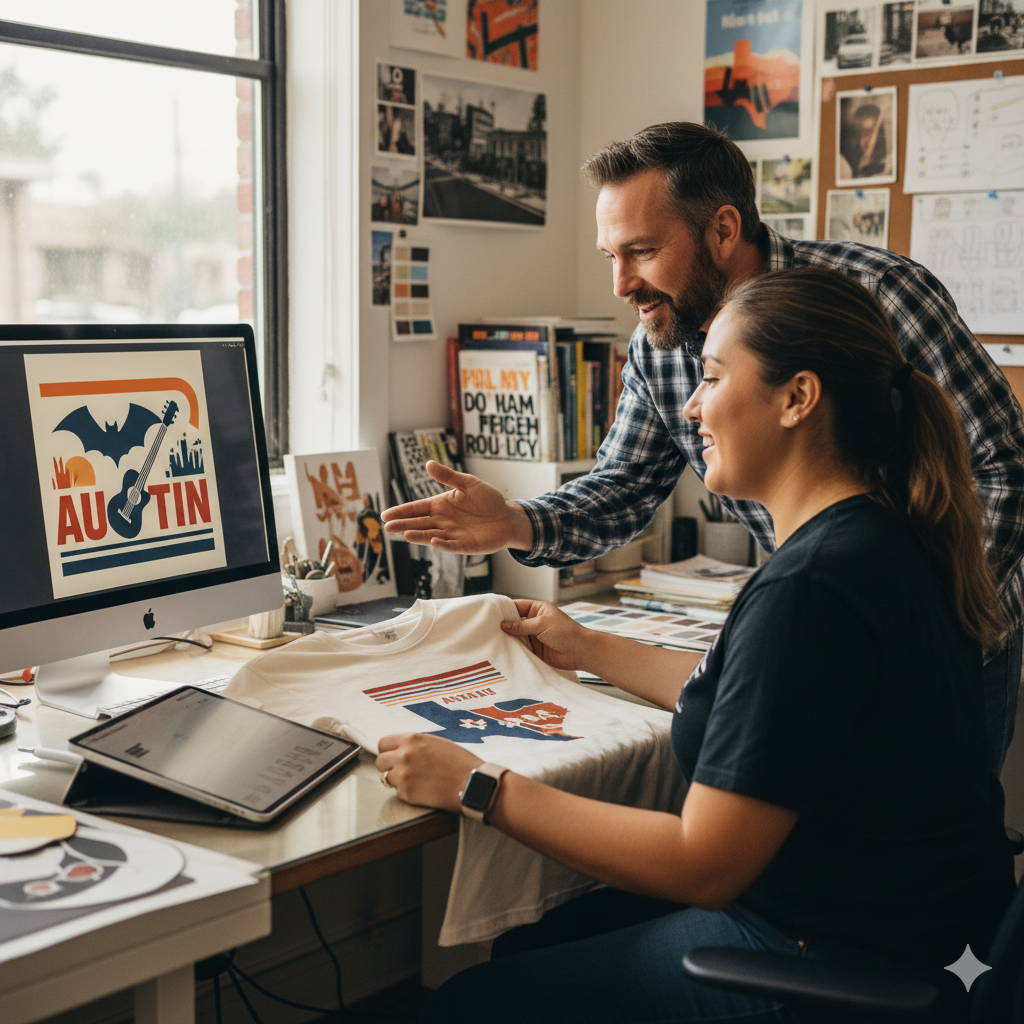
A local Austin print shop sees things differently. They’ve printed for the coffee shop down the street, the startup that just got funded, the nonprofit that’s been running community events for a decade. They know what’s working visually in this market because they see it every day.
That context shapes the guidance they can offer. They might suggest a different font weight because they know how it prints on the shirt style you’ve chosen. Perhaps they recommend adjusting your color because they’ve seen how certain shades look washed out in Texas sun. They might point out that your design is similar to something a well-known local brand already uses.
This kind of feedback doesn’t come from an online checkout page.
Design Decisions That Affect Print Quality
Good design on screen doesn’t automatically translate to good design on fabric. There’s a gap between what looks right in a digital file and what looks right on a finished shirt, and bridging that gap requires understanding how printing actually works.
Color Complexity
More colors usually means higher cost, especially with screen printing for detailed designs. Each color requires a separate screen, which adds setup time and expense. A local printer can help you simplify a complex design to hit your budget without sacrificing visual impact. Sometimes a two-color version of your logo looks sharper on a shirt than the full-color original.
Detail and Scale
Fine lines and small text that look crisp on a monitor can blur or bleed when printed on fabric. A design-savvy printer will flag these issues before production and suggest adjustments. Maybe that tagline needs to be larger. Maybe those thin lines should be thickened. These tweaks preserve your design intent while ensuring the final product looks professional.
Placement and Proportion
A logo that looks balanced in a square format might feel cramped or oversized when placed on a shirt. Placement matters too. Left chest, full front, back print, sleeve detail. Each placement has conventions and constraints. Local printers can show you samples and mockups so you see exactly how your design will sit on the actual garment before you commit.
Industry-Specific Design Considerations in Austin
Different industries have different visual expectations. What works for a tech company won’t necessarily work for a barbecue joint, and vice versa. Here’s how design choices shift across Austin’s major business communities.
Tech and Startups
Austin’s tech scene tends toward clean, modern aesthetics. Sans-serif fonts, minimal color palettes, and restrained logos dominate. Branded company merchandise for tech teams often features subtle branding rather than loud graphics. Think small chest logos, muted tones, and apparel employees actually want to wear outside the office.
Food and Beverage
Breweries, coffee roasters, food trucks, and restaurants in Austin lean into personality. Hand-drawn illustrations, vintage-inspired typography, and bold colors are common. The design should feel approachable and a little playful. Staff shirts double as marketing, so they need to be visually interesting enough that customers ask about them.
Music and Creative
Austin’s music scene has its own visual heritage. Concert posters, album art, and venue merchandise all share a certain rawness and artistic credibility. Designs in this space often feature illustration-heavy artwork, distressed textures, or typography that feels hand-crafted rather than corporate. The goal is to look like something a fan would actually wear, not like branded merchandise.
Fitness and Outdoor
Gyms, yoga studios, running clubs, and outdoor brands in Austin typically favor athletic aesthetics. Performance fabrics, bold typography, and designs that look good in motion. The branding needs to work on moisture-wicking materials, which affects print method choices and color vibrancy.
Getting the Most from Your Local Printer’s Design Expertise
If you’re working with a local Austin print shop that offers design guidance, here’s how to make that collaboration productive:
Bring reference examples. Show them shirts, logos, or designs you like. Even if you can’t articulate exactly what you want, visual references help a printer understand your aesthetic direction.
Share context about your audience. Who’s wearing these shirts? Employees? Customers? Event attendees? The answer affects design recommendations.
Be open to feedback. If your printer suggests changes to your design, hear them out. They’re not trying to override your vision. They’re trying to make sure the final product matches your expectations.
Ask to see samples. Before committing to a large order of custom branded shirts, ask to see how similar designs have printed on the same fabric. This removes guesswork and builds confidence in the final result.
Design Is Part of the Print Decision
Too many businesses treat printing as a purely transactional step. Upload a file, pick a shirt, enter payment, wait for delivery. That approach works if your design is already perfect and needs no input. But most designs benefit from a second set of eyes, especially eyes that understand the local market.
When you work with a local Austin print shop, you get more than production. You get perspective. Someone who can tell you whether your design will land with the audience you’re trying to reach. You get guidance that generic online printers simply cannot offer.
Your brand deserves more than a template. It deserves a printer who understands where you’re coming from and who you’re trying to reach.
────────────────────────────────────────────────────────────
Have a design you want to talk through? Bring it in and let’s see how it translates to print.