
You’ve got a great idea. Maybe it’s shirts for your band’s upcoming show at Mohawk. Or branded tees for your food truck’s first summer season. Maybe it’s polos for a small team heading to their first trade show. Whatever it is, you don’t need 500 units. You need 20. Or 30. Or maybe just 12.
And that’s where most online printers stop being helpful. Their minimum order requirements are built for corporations placing massive orders, not for Austin’s creative community trying to get something small done right. You end up either overpaying for quantity you don’t need or walking away thinking professional printing just isn’t accessible for projects your size.
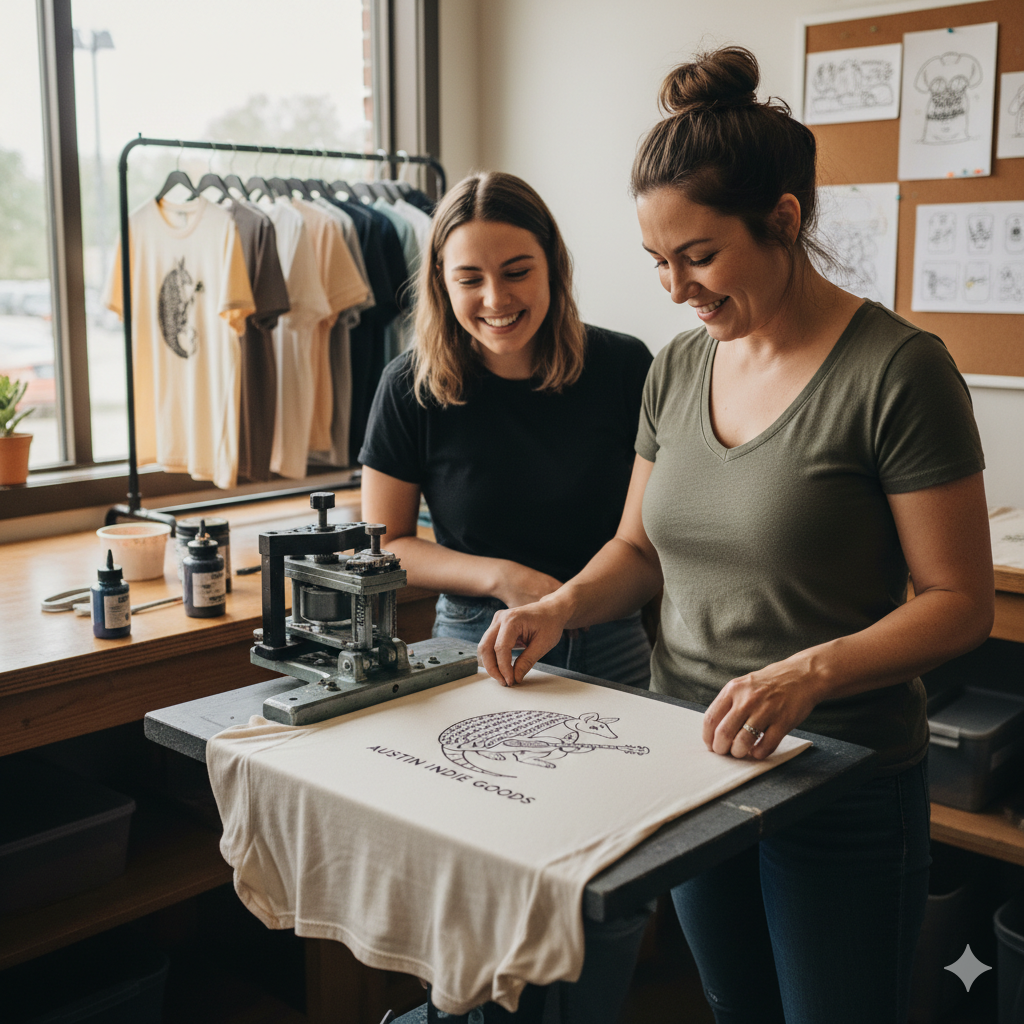
It doesn’t have to work that way. Local print shops exist specifically to serve the orders that national printers don’t want to bother with. And in a city like Austin, where small creative businesses drive the culture, that flexibility matters.
The Minimum Order Problem
National online printers optimize for volume. Their business model depends on processing thousands of large orders through automated systems. When you show up needing 24 shirts, you’re not their target customer. You’re an inconvenience.
That’s why their minimum order requirements exist. Some won’t touch an order under 50 units. Others technically accept smaller quantities but price them so aggressively that you’re paying nearly the same total cost as a much larger run. The message is clear: come back when you’re ready to order in bulk.
For a lot of Austin businesses and creators, that day never comes. A three-piece band doesn’t need 100 shirts. A pop-up restaurant testing a concept doesn’t need 200 branded aprons. A startup with four employees doesn’t need 50 polos sitting in a closet. The need is real, but the scale is small. And traditional online printers aren’t set up to help.
Who Actually Needs Small Batch Printing
Small runs aren’t a compromise. For a lot of projects, they’re exactly right. Here’s who benefits most from a printer willing to work at smaller quantities.
Musicians and artists. A band printing merch for a single show or short tour doesn’t need inventory for a year. They need 24 shirts that look good and sell out by the end of the night. Same goes for visual artists printing limited-edition pieces or comedians selling shirts at a weekend run of shows. The whole point is scarcity and exclusivity, not warehouse stock.
Food and beverage startups. A new coffee roaster on East Austin doesn’t know yet if their branded shirts will sell. A food truck testing the waters at local markets wants staff shirts but isn’t ready to commit to a huge order. Small batches let them experiment, gauge interest, and refine their branding before scaling up.
Early-stage companies. Startups grow fast, but they start small. A founder attending their first conference with three team members doesn’t need 100 custom shirts for small teams. They need 12 that look sharp enough to make a strong first impression. As the team grows, orders can grow too. But forcing bulk on a five-person company makes no sense.
Nonprofits and community groups. A neighborhood cleanup crew needs 20 volunteer shirts. A youth sports team needs 15 jerseys. That book club printing shirts for their annual retreat needs exactly 8. These aren’t massive organizations with massive budgets. They’re small groups doing good work who deserve access to professional printing without being forced into overbuying.
One-time personal projects. Family reunions. Bachelor parties. Memorial shirts. Fantasy football league champions. These orders are often 10 to 30 units, and they matter deeply to the people ordering them. A printer who dismisses small personal orders is missing the point entirely.
Why Local Printers Handle Small Runs Better
National printers are built for scale. Local printers are built for people. That’s a fundamental difference that shows up in how they approach small orders.
Flexible minimums. A local Austin print shop can take your 15-shirt order without batting an eye. They’re not trying to hit production quotas designed for industrial-scale operations. They’re trying to serve the businesses and creators in their community, whatever the order size.
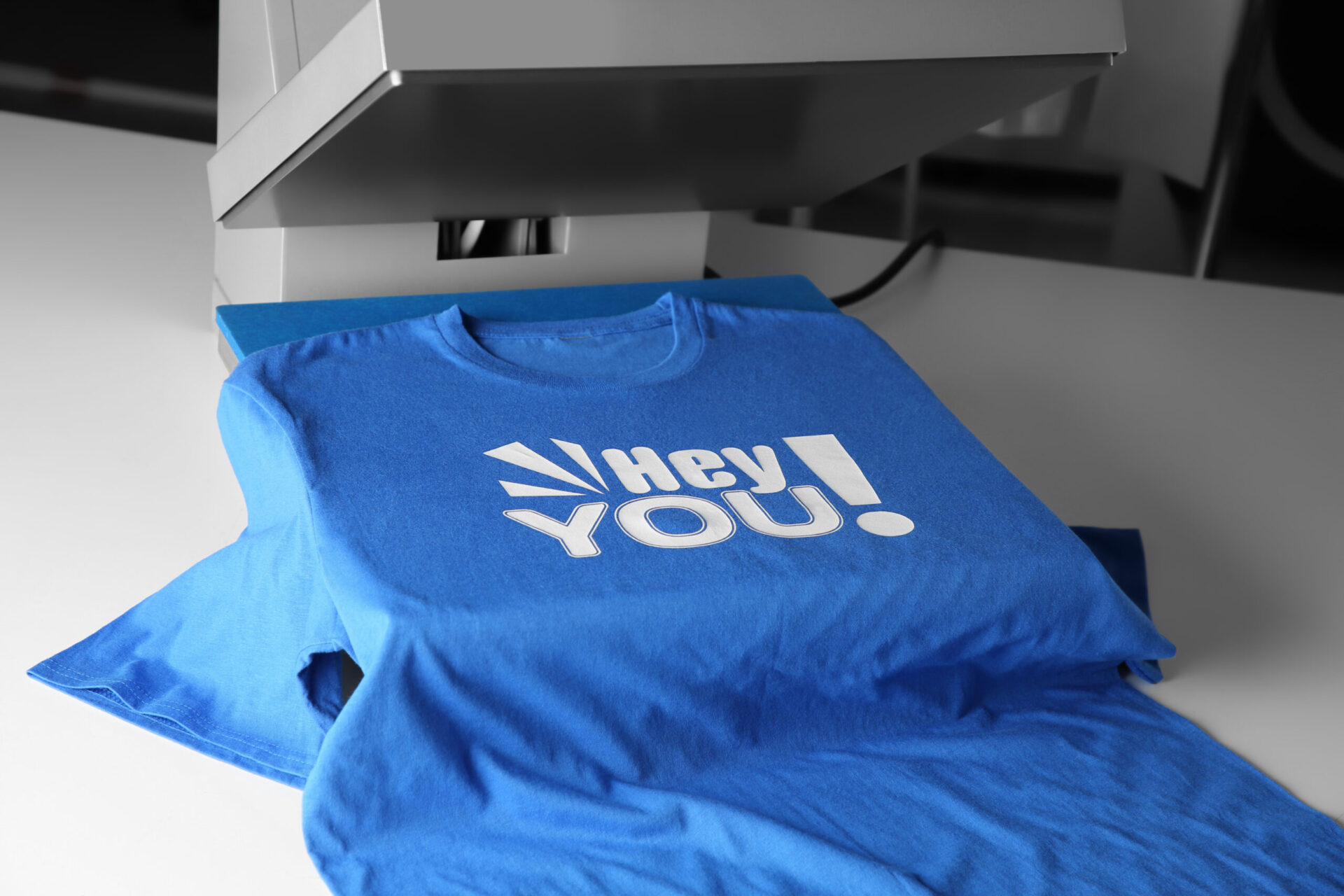
Methods that fit small quantities. Not every print method makes sense for every order size. Screen printing is cost-effective at higher volumes, but heat press for short runs and direct-to-garment printing work beautifully for smaller batches. A local printer can match the method to your quantity instead of forcing everything through a one-size-fits-all production line.
No pressure to overbuy. Online printers often nudge you toward larger quantities with tiered pricing that makes bigger orders feel like better deals. A local shop gives you honest guidance about what you actually need. If 25 shirts is the right number, that’s what you order. No one’s pushing you to 50 just to hit a price break that benefits the printer more than you.
Quality at any quantity. Some printers treat small orders as afterthoughts. The work gets rushed, the attention to detail disappears, and the final product reflects the lack of care. A good local printer gives your 20-shirt order the same attention they’d give a 200-shirt order. The quantity doesn’t determine the quality.
Small Runs as a Testing Strategy
There’s a smart business reason to start small even if you eventually plan to order more. A small batch lets you test before you commit.
Maybe you’re not sure how a design will look on the actual fabric. Perhaps you want to see how customers respond before printing inventory. Maybe you’re trying two different shirt styles and want to compare them in the real world before choosing one for a larger run.
A 25-unit test run costs a fraction of what you’d lose by printing 200 shirts with a design that doesn’t land. Local printers understand this. They’re happy to do a small initial order knowing that a successful test often leads to a larger reorder down the line. It’s a relationship, not a one-time transaction.
What Small Batch Printing Looks Like in Practice
Here’s how small orders actually play out when you’re working with a local Austin printer who welcomes them.
A brewery on St. Elmo printed 30 shirts for their taproom staff. They weren’t sure which design would feel right with their brand, so they started with a small run to test it out. The shirts sold so well to customers that they came back for a larger retail batch the following month.
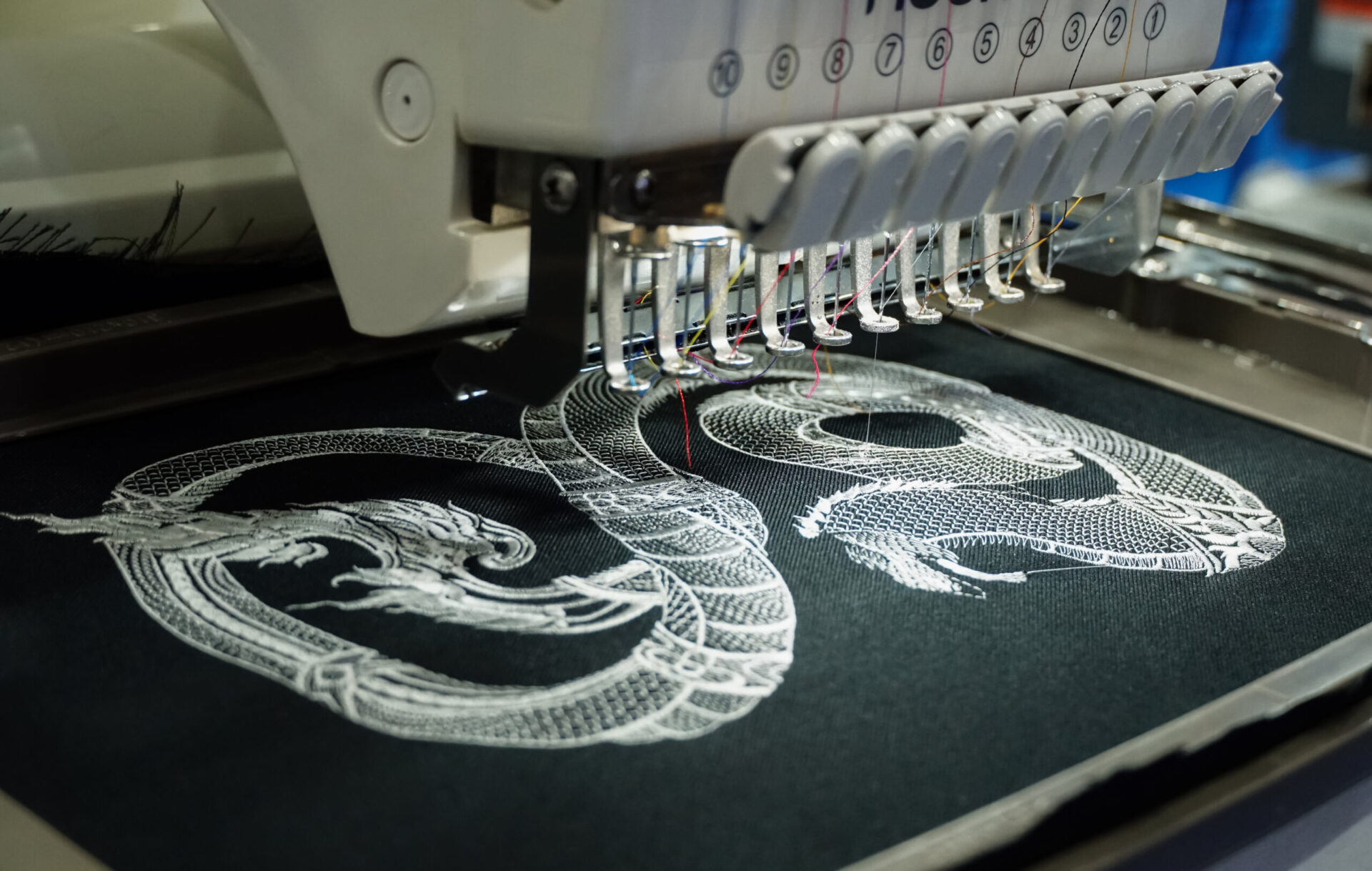
One yoga instructor ordered 18 tank tops for a teacher training retreat. She needed a specific style, a specific color, and embroidered pieces for boutique orders that felt premium rather than mass-produced. A national printer would have quoted her for 50 minimum. Our local shop made exactly what she needed.
A tech founder printed 10 polos for his team’s first investor demo day. He wasn’t ready for a big merchandise push. He just wanted his small team to look unified and professional for one important afternoon. That’s all he ordered, and that’s all he paid for.
A local comedian printed 24 shirts for a weekend of shows at Cap City. She sold out Friday night and wished she’d ordered more. But that’s a good problem to have. Better than sitting on 100 shirts that don’t move because the design didn’t connect.
You Don’t Have to Order Big to Get It Done Right
The idea that professional printing requires bulk quantities is outdated. It’s a holdover from a time when setup costs made small runs impractical. Modern methods and local shops have changed that equation.
If you’ve got a project that needs 15 shirts or 25 hats or 30 totes, you can get it done. You don’t have to settle for lower quality because your order is smaller. You don’t have to overbuy just to meet an arbitrary minimum. And you don’t have to explain yourself to a printer who doesn’t understand why your small project matters.
Austin is full of small creative businesses doing interesting work at modest scale. The print shop you choose should be able to meet you where you are.
─────────────────────────────────────────────────────────
Got a small project in mind? Tell us what you’re thinking. No minimums, no pressure.